You are here : Home > Publications > ICPC Viewpoints >
As fibre-optic sensing in submarine cables develops rapidly, governments should exercise restraint in regulating
Updated Monday 16 February 2026“The International Cable Protection Committee urges governments to collaborate with the submarine cable industry on fibre sensing to better understand the regulatory, commercial, and technical challenges, and the societal opportunities these innovations present”
Recent and rapid advances in the development of sensing along the optical fibres inside submarine cables have been accompanied by a keen interest from some regulators and other government agencies. The International Cable Protection Committee (ICPC) argues that regulation of submarine cable sensing risks stifling innovation and investment in a sector which makes a huge contribution to global connectivity, and thereby to economic growth and wider societal value.
Fibre-based sensing in submarine cables is a rapidly developing field, and its value to ocean science and to the protection of critical national infrastructure is impossible to quantify today. By comparison, regulation tends to be slow-moving and any initiatives to regulate are likely to be quickly out of step with the benefits that innovation will bring. Stakeholders are encouraged to engage with the ICPC to discuss and monitor the ever-changing landscape for cable-based optical sensing.
The owners and operators of submarine telecommunications and energy cables are rightly focused on delivering commercial results on behalf of their customers and shareholders. They are not routinely in the business of collecting and processing ocean-derived data for government departments and should not be obliged to do so because of regulation: such a course may impair the business case for current and future cable investments.
This Viewpoint compares the established and emerging technologies available, and considers the commercial and regulatory implications of sensing. It concludes with specific recommendations for governments and other interested parties.
Background
Submarine telecommunications and power cables criss-cross the oceans: around 1.8 million kilometres of in-service cables lie on the seabed today, on routes ranging in length from a few tens of kilometres to transoceanic cables with some segments exceeding 10,000km.
On the other hand, our detailed knowledge of the deep ocean environment – including water temperature, salinity and other parameters that are critical to monitoring climate change and natural hazards – is currently largely dependent on a relatively small number of discrete sensors in the ocean. These include ARGO floats [1] which drift in ocean currents while recording key data, surfacing periodically to transmit the results back to base via satellite, and tethered DART buoys for tsunami forecasting [2]. Several dedicated cabled ocean observatories have also been developed and installed, such as the NEPTUNE Ocean Observatory off western Canada [3] and the S-Net earthquake and tsunami monitoring system around the seismically-active Japan Trench [4].
Whichever approach to dedicated ocean sensing is taken, there are compromises to be made. Floats drifting in the water column do not transmit data in real time and may be susceptible to theft or vandalism when they surface. Dedicated cabled observatories are inevitably costly if they are to cover a significant area of the ocean floor.
What then, if submarine cables worldwide could be turned into a network of sensors capable of detecting subtle changes in the ocean environment?
Fibre sensing - key technologies
Cable-based sensing includes several emergent and emerging technologies such as:
- Distributed Acoustic Sensing (DAS)
- Distributed Temperature Sensing (DTS)
- Interferometry or Phase with High Loss Loop Back (HLLB)
- State of Polarisation (SOP)
Optical interferometry involves the detection of small phase changes causes by environmental perturbations on an ultra-stable laser signal. This requires an external laser source which can be added to existing cable systems, again without modification to the wet plant. Variations in the fibre environment induce small changes in the round-trip delay of the light signal that can be identified by comparing the returned signal to the injected signal. Measurements can be made with no impact on data traffic on other channels and over thousands of kilometres. In more recent versions of this technology, the use of loop-back optical circuits, which are present in many (but not all) submarine repeaters to monitor the health of the wet plant, can localise measurements to the distance between repeaters (used to boost optical signals for telecommunications over long distances), typically in the range 60-100km. Interferometry therefore provides a coarser spatial resolution than DAS, but it can operate over transoceanic ranges – thousands of kilometres or more.
Finally, measurements based on the state of polarisation (SOP) of an optical signal use the commercial traffic and the transponders that transmit it to detect environmental changes. In modern submarine telecoms, the capacity of an optical fibre is increased by transmitting data independently on two orthogonal polarisation axes. Mechanical strain applied to a fibre, such as by physical contact on the seabed or simply by the action of ocean tides or currents, changes the refractive properties of that fibre. This in turn causes real-time changes in the state of polarisation of the detected optical signal. Conventionally, those environmental perturbations represent errors to be corrected by receiver electronics in the accurate detection of the submarine telecom traffic. Now it is possible to infer seabed conditions by collecting this information – data which would have previously been discarded. Similarly to optical interferometry, conditions on the seabed and in the overlying water column can now be inferred on many cables to a spatial resolution equal to the distance between repeaters (60-100km). SOP monitoring also does not require any change to the wet plant, nor does it impact on commercial traffic.
How do these technologies compare?
In summary, of the various techniques available to monitor the status of a submarine cable, some (such as DAS) have limited range but high spatial resolution, while others (interferometry and state of polarisation) have limited spatial resolution but long range. All however generate significant volumes of raw data (of the order of terabytes per day) which need to be processed somewhere to allow any real-time intelligence to be gleaned. It is generally assumed that the optimum location to process such raw data is close to the cable landing point to avoid backhauling the raw data to a remote location.
While the state of the art is rapidly developing, some technologies are inherently more sensitive than others to changes in the physical environment. For example, DAS can detect a wide range of acoustic frequencies (including whale song), but may become saturated when a cable is subject to contact from a ship’s anchor or trawl gear. Cable sensing based on state of polarisation (SOP) is less sensitive, which makes it potentially more applicable in recording severe external aggression to a cable.
Applications
DAS and DTS have found applications in oil and gas reservoir monitoring for several years and are among the more mature of the technologies available today.
Scientific applications for fibre sensing have been prominent in recent publications, with a particular focus on earthquakes and seismic events, using DAS, interferometry and state of polarisation techniques. The ability to detect tsunamis and storm surges ahead of their landfall offers a valuable opportunity to provide an early warning ahead to inform decision making and disaster response, and fibre sensing has recently been used to inform evacuations ahead of volcanic unrest [5].
The study of biological noise, generated by a wide range of animals that use sound to communicate, hunt and locate themselves, is a growing area of research. Perhaps the best-known organisms to use noise are cetaceans (whales and dolphins). Recent studies have shown that Distributed Acoustic Sensing along fibre-optic cables can be used to monitor cetacean activity [6].
Of particular interest to the ICPC is of course the use of fibre-based sensing for submarine cable protection and security. Ocean conditions can pose a hazard to cables due to strumming, scour and abrasion. Waves, storms, seafloor currents and internal waves all generate ambient noise in the ocean, which has been shown to be detectable using fibre-optic sensing [7].
It is known that most cable faults are due to interactions with commercial shipping and fishing (such as trawling) [8]. DAS in particular, with its relatively high sensitivity and spatial resolution, offers cable owners an additional monitoring tool to enhance traditional surveillance methods such as the global vessel Automatic Identification System (AIS). Cable owners and operators could use fibre-based sensing in conjunction with AIS, both to provide early indication of approaching vessels – potentially allowing a pre-emptive warning to the vessel’s master that they are nearing a submarine asset – and to collect supplementary evidence to support any subsequent legal action should damage to a cable occur.
With submarine cables now being widely recognised as elements of critical national infrastructure (CNI), the protection of such cables has lately attracted the interest of various government agencies. For example, acoustic sensing in the water column presents opportunities beyond science, which in turn piques government interest, brings scrutiny and potential additional regulation for the cable sector.
Commercial implications of adopting fibre sensing
The development of modern submarine fibre-optic cables primarily represents a commercial enterprise, with the aim of building telecom capacity on financially attractive routes, which can be disaggregated and re-sold to other market players. Alternatively, the same cables may serve wider business goals, such as connecting geographically diverse data centres in the advancement of social media networks or enterprise cloud platforms.
Whatever the motivation, in most cases, a common metric to help determine the commercial viability of a fibre-optic cable is the cost per bit. If an individual cable owner (or consortium of owners) opts to deploy fibre sensing on a cable, care must be taken to determine whether such a decision will impact the ultimate data capacity of that cable route.
Individually, cable owners will make up their own minds about the commercial value of fibre sensing, considering additional hardware costs, and any impairments in data capacity versus potential benefits in service availability and savings in maintenance overheads. Additional factors such as the use of physical space in cable landings stations, data processing and backhaul capacity needs may also be considered.
The ICPC acknowledges that there are differing opinions among cable owners and operators about the value of fibre-based sensing, with some exploring ways to integrate the technologies into their operational practices, while others are cautious of any additional permitting burden that this may create. Given the pace of technological development, it is likely to take some time for the true capabilities and commercial implications of sensing to be fully understood.
Regulatory implications of adopting fibre sensing
National-level regulation of fibre-based sensing is in its infancy, as states seek to balance submarine cable development, protection, and resilience with jurisdiction over scientific marine data gathering and security considerations.
The United Nations Convention on the Law of the Sea (UNCLOS) establishes separate regimes for submarine cables and marine scientific research (MSR) that could conflict in cases where submarine cables are used to gather data in the marine environment [9]. This could lead coastal states to impose consent requirements, delays, and other restrictive conditions that would not exist absent an activity that is arguably MSR. UNCLOS grants coastal states broad and vague authority to regulate MSR, although it does not require regulation of MSR. UNCLOS also grants the coastal state the exclusive right to conduct MSR in its territorial sea and the right to regulate, authorise and conduct marine scientific research in its exclusive economic zone (EEZ) and on its continental shelf. UNCLOS does not define MSR, and coastal states have asserted that they have discretion to define the scope of MSR. Some states define MSR narrowly and/or impose few requirements for conduct of MSR, while others define MSR broadly and treat even the drift of an ARGO float into their EEZs as an MSR activity requiring consent.
UNCLOS treats MSR within a coastal state’s EEZ or continental shelf as an activity subject to consent that should be granted in “normal circumstances” (which include conduct exclusively for peaceful purposes), but it permits withholding of consent in certain circumstances, including concerns about exploration and exploitation of natural resources, drilling on the continental shelf, protection of the marine environment, and construction, operation or use of artificial islands, installations, and structures (activities that UNCLOS treats as mutually exclusive from submarine cables). UNCLOS does not require that MSR permission be granted within a specified period of time, and it does not prohibit the imposition of fees for conduct of MSR. It also grants the coastal state certain rights to participate in the MSR activity and requires sharing of collected MSR data with the coastal state.
Exercises of jurisdiction over fibre-optic sensing using submarine cables as MSR could conflict with submarine cable freedoms under UNCLOS. States that negotiated UNCLOS recognised “the desirability of establishing … a legal order for the seas and oceans which will facilitate international communication.” On the high seas, all states are entitled to install and maintain submarine cables. On the continental shelf, all states are entitled to exercise the same high-seas freedoms to install and maintain submarine cables, subject to reasonable measures of the coastal state with respect to exploration of the continental shelf and exploitation of its resources. In the exclusive economic zone, all states are entitled to install and maintain submarine cables. Finally, in its territorial sea, the coastal state has sovereignty to regulate submarine cable installation and repair.
In the ICPC’s view, fibre-based sensing that serves the operation of the submarine telecommunications cable by promoting infrastructure protection and continuity of communications is an exercise of submarine cable rights and freedoms under UNCLOS and not MSR. Moreover, the ICPC believes that states should be cautious in exercising jurisdiction and imposing consent requirements on fibre-based sensing that is used for scientific activities that look more like MSR, given the importance of understanding the marine environment, assessing climate change, and promoting disaster detection and warning.
Conclusions and recommendations
These trends prompt the ICPC to urge that governments should:
- Exercise restraint in regulating or introducing prohibitive mandates on cable-based sensing. As fibre-optic sensing technology for submarine cables develops rapidly the International Cable Protection Committee urges governments to collaborate with the submarine cable industry on sensing technology and its uses. This will enable the relevant experts to better understand the regulatory, commercial, and technical challenges as well as the societal opportunities these innovations present. These warrant balanced and informed policy discussion, particularly considering that cable sensing technologies are advancing at a rate likely to outpace any regulation.
- Recognise that telecommunication and energy cables exist for commercial purposes, unconnected with the collection, processing and storage of ocean data. Cable owners should therefore be free of the obligation to carry out these functions, as this may reduce appetite for investment in submarine cables, enablers of economic growth.
- Guard against jurisdictional creep and erosion of submarine cable freedoms under international law, and to decline to require deployment of particular sensing devices, technologies, or configurations that could affect submarine cable performance.
- Take note of the UNEP-WCMC report “Submarine Cables and Marine Biodiversity” [10], which provides specific recommendations for policymakers, industry, and the research community to advance dialogue and coordinated approaches on the intersection of submarine cables and marine conservation.
- Argo
- DART® (Deep-ocean Assessment and Reporting of Tsunamis)
- Cabled Networks | Ocean Networks Canada
- Network Center for Earthquake, Tsunami and Volcano
- Li, J., Biondi, E., Heimisson, E.R., Puel, S., Zhai, Q., Zhang, S., Hjörleifsdóttir, V., Wei, X., Bird, E., Klesh, A. and Kamalov, V., 2025. Minute-scale dynamics of recurrent dike intrusions in Iceland with fiber-optic geodesy. Science, 388(6752), pp.1189-1193.
- Wilcock, W.S., Abadi, S. and Lipovsky, B.P., 2023. Distributed acoustic sensing recordings of low-frequency whale calls and ship noise offshore Central Oregon. JASA Express Letters, 3(2).
- Marra, G., Fairweather, D.M., Kamalov, V., Gaynor, P., Cantono, M., Mulholland, S., Baptie, B., Castellanos, J.C., Vagenas, G., Gaudron, J.O. and Kronjäger, J., 2022. Optical interferometry–based array of seafloor environmental sensors using a transoceanic submarine cable. Science, 376(6595), pp.874-879.
- Summary of global repair commencement time analysis (ICPC, available on request)
- Bressie, K., Using submarine cables for climate monitoring and disaster warning - Opportunities and legal challenges (International Telecommunication Union, Intergovernmental Oceanographic Commission of the United Nations Educational, Scientific and Cultural Organization, and World Meteorological Organization, 2012).
- UNEP-WCMC: Submarine Cables and Marine Biodiversity https://resources.unep-wcmc.org/products/WCMC_RT691
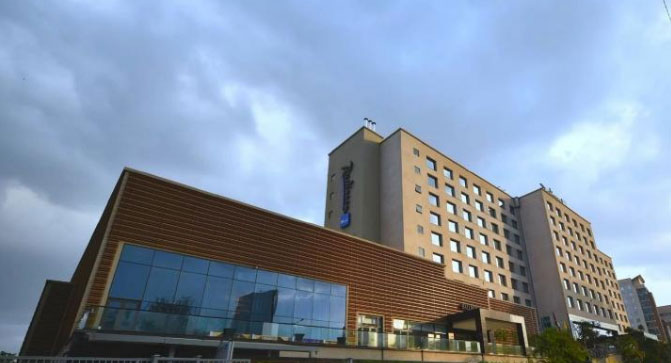
2027 ICPC Plenary: 13th - 15th April 2027
Radisson Blu Hotel, Nairobi, Kenya
'Call for Presentations' to be issued in November 2026.
2027 ICPC Plenary